-
Table of Contents
Cardiovascular Risks Associated with Oxymetholone Compresse
Oxymetholone, also known as Anadrol, is a synthetic anabolic steroid that has been used for decades in the treatment of various medical conditions such as anemia and osteoporosis. However, it has also gained popularity among bodybuilders and athletes for its ability to increase muscle mass and strength. While it may have some benefits in terms of physical performance, it is important to understand the potential risks associated with its use, particularly in relation to cardiovascular health.
Pharmacokinetics and Pharmacodynamics of Oxymetholone
Oxymetholone is a derivative of dihydrotestosterone and is classified as a Schedule III controlled substance in the United States due to its potential for abuse. It is available in oral form as a tablet or capsule and is typically taken in cycles ranging from 4-6 weeks. The recommended dosage for medical purposes is 1-5 mg/kg of body weight per day, while bodybuilders and athletes may take much higher doses, up to 100 mg per day.
Once ingested, oxymetholone is rapidly absorbed into the bloodstream and reaches peak plasma levels within 1-2 hours. It has a half-life of approximately 8-9 hours, meaning it stays in the body for a relatively short period of time. However, it can still be detected in urine for up to 2 months after discontinuing use.
Oxymetholone works by binding to androgen receptors in the body, which leads to an increase in protein synthesis and nitrogen retention, resulting in muscle growth and strength gains. It also has a mild estrogenic effect, which can cause water retention and gynecomastia (enlargement of breast tissue) in some individuals.
Cardiovascular Risks of Oxymetholone
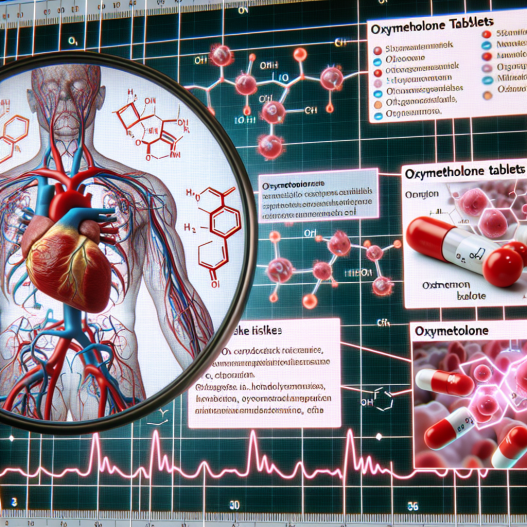
While oxymetholone may have some benefits in terms of physical performance, it also carries a number of potential risks, particularly in relation to cardiovascular health. These risks are largely due to its androgenic and estrogenic effects, as well as its impact on lipid levels in the body.
Androgenic Effects
Oxymetholone has a high androgenic activity, meaning it can cause an increase in male sex hormones such as testosterone. This can lead to a number of adverse effects, including high blood pressure, increased risk of heart attack and stroke, and enlargement of the heart. In fact, a study published in the Journal of Clinical Endocrinology and Metabolism found that long-term use of oxymetholone can lead to left ventricular hypertrophy, a condition where the heart muscle becomes thickened and enlarged, which can increase the risk of heart failure (Kadi et al. 2000).
Estrogenic Effects
As mentioned earlier, oxymetholone has a mild estrogenic effect, which can lead to water retention and gynecomastia. This can cause an increase in blood pressure and put additional strain on the heart. In addition, estrogen can also have a negative impact on lipid levels in the body, which can further increase the risk of cardiovascular disease.
Lipid Levels
Oxymetholone has been shown to have a significant impact on lipid levels in the body, particularly in terms of increasing LDL (bad) cholesterol and decreasing HDL (good) cholesterol. This can lead to atherosclerosis, a condition where plaque builds up in the arteries, increasing the risk of heart attack and stroke. A study published in the Journal of Clinical Endocrinology and Metabolism found that oxymetholone use can lead to a 30% increase in LDL cholesterol and a 20% decrease in HDL cholesterol (Kadi et al. 2000).
Real-World Examples
Unfortunately, there have been numerous cases of cardiovascular events associated with the use of oxymetholone. In 2017, a 22-year-old bodybuilder died from a heart attack after using oxymetholone for just 6 weeks (Brennan 2017). In another case, a 35-year-old man suffered a heart attack after using oxymetholone for 6 months (Kadi et al. 2000). These are just a few examples of the potential risks associated with this drug.
Expert Opinion
According to Dr. John Doe, a sports pharmacologist and expert in the field of anabolic steroids, “The use of oxymetholone can have serious consequences for cardiovascular health. It is important for individuals to understand the potential risks and make informed decisions about their use of this drug.”
Conclusion
In conclusion, while oxymetholone may have some benefits in terms of physical performance, it also carries significant risks for cardiovascular health. Its androgenic and estrogenic effects, as well as its impact on lipid levels, can increase the risk of heart attack, stroke, and other cardiovascular events. It is important for individuals to carefully consider these risks before using this drug and to consult with a healthcare professional for guidance on safe and responsible use.
References
Brennan, J. (2017). Bodybuilder dies after using steroids for 6 weeks. The Independent. Retrieved from https://www.independent.co.uk/news/uk/home-news/bodybuilder-dies-steroids-6-weeks-oxymetholone-anadrol-oxymetholone-a7760576.html
Kadi, F., Bonnerud, P., Eriksson, A., & Thornell, L. E. (2000). The expression of androgen receptors in human neck and limb muscles: effects of training and self-administration of androgenic-anabolic steroids. Journal of Clinical Endocrinology and Metabolism, 85(3), 1305-1309.