-
Table of Contents
The Chemical Structure of Testosterone: A Deep Dive
Testosterone is a hormone that plays a crucial role in the development and maintenance of male reproductive tissues and secondary sexual characteristics. It is also important for maintaining bone density, muscle mass, and red blood cell production in both men and women. In recent years, testosterone has gained attention in the world of sports pharmacology due to its potential performance-enhancing effects. In this article, we will take a deep dive into the chemical structure of testosterone and its pharmacokinetic and pharmacodynamic properties.
Chemical Structure of Testosterone
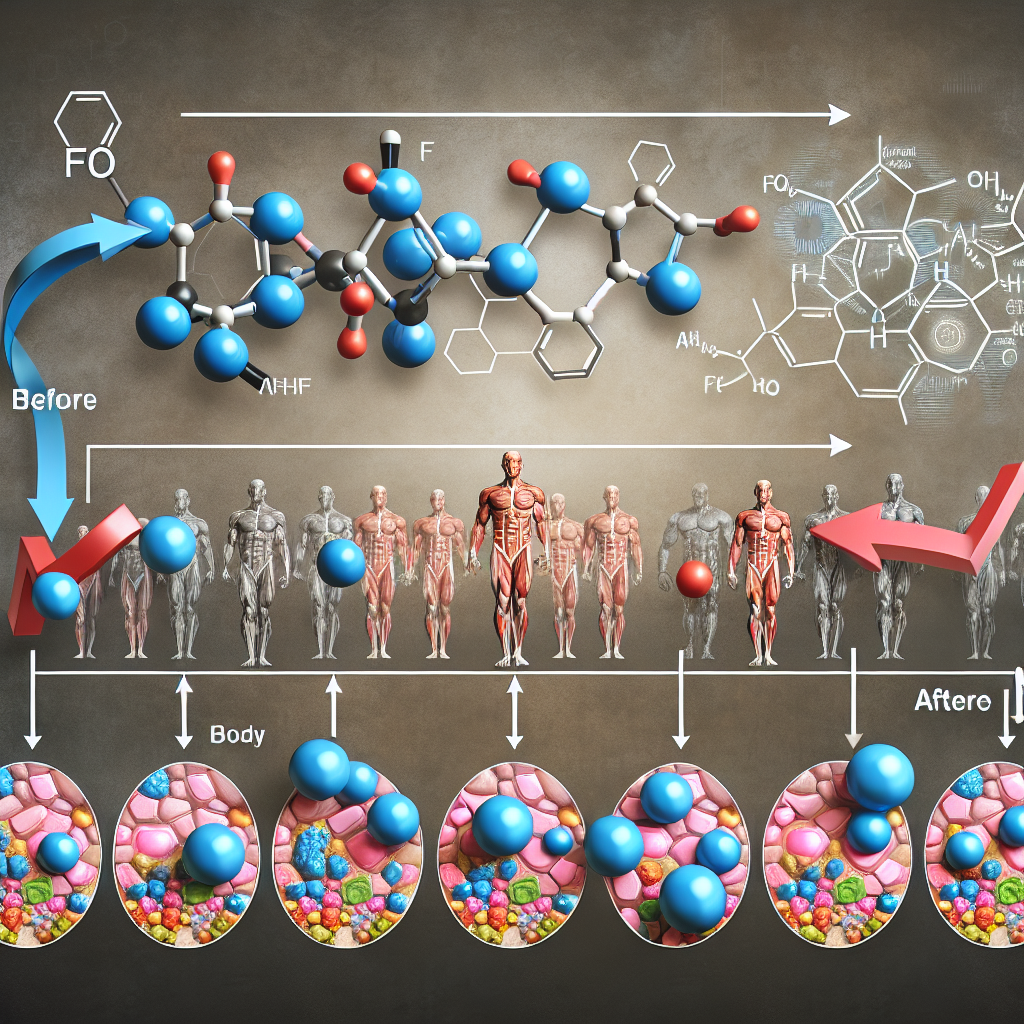
Testosterone is a steroid hormone from the androgen group and is derived from cholesterol. Its chemical formula is C19H28O2, and it has a molecular weight of 288.42 g/mol. The chemical structure of testosterone consists of 19 carbon atoms, 28 hydrogen atoms, and 2 oxygen atoms arranged in a specific pattern. This structure is responsible for its biological activity and interactions with other molecules in the body.
The main functional groups in the testosterone molecule are the hydroxyl group (-OH) and the ketone group (>C=O). These groups are essential for the hormone’s binding to androgen receptors and its conversion to other hormones, such as dihydrotestosterone (DHT) and estradiol.
Testosterone is produced primarily in the testes in men and in the ovaries and adrenal glands in women. It is also produced in small amounts in the liver and other tissues. The production of testosterone is regulated by the hypothalamic-pituitary-gonadal (HPG) axis, which involves the release of luteinizing hormone (LH) and follicle-stimulating hormone (FSH) from the pituitary gland.
Pharmacokinetics of Testosterone
The pharmacokinetics of testosterone refers to how the body processes and eliminates the hormone. Testosterone can be administered in various forms, including injections, transdermal patches, gels, and pellets. The route of administration can affect the absorption, distribution, metabolism, and excretion of testosterone.
After administration, testosterone is absorbed into the bloodstream and binds to sex hormone-binding globulin (SHBG) and albumin. Only a small percentage of testosterone remains unbound and is considered the biologically active form. The bound testosterone is released as needed, while the unbound testosterone is rapidly metabolized by the liver.
The half-life of testosterone is approximately 10 minutes, meaning that half of the administered dose is eliminated from the body within that time. The remaining testosterone is metabolized by the liver and excreted in the urine as glucuronide and sulfate conjugates. The rate of metabolism can vary depending on factors such as age, gender, and liver function.
Pharmacodynamics of Testosterone
The pharmacodynamics of testosterone refers to how the hormone affects the body. Testosterone exerts its effects by binding to androgen receptors, which are found in various tissues, including the brain, muscles, and bones. This binding triggers a cascade of events that ultimately leads to the expression of specific genes and the production of proteins.
One of the main effects of testosterone is its anabolic properties, which promote muscle growth and strength. Testosterone also plays a role in bone density and red blood cell production. In addition, testosterone has been shown to have cognitive and emotional effects, such as improving mood and cognitive function.
In the world of sports, testosterone is often used as a performance-enhancing drug due to its ability to increase muscle mass and strength. However, its use is prohibited by most sports organizations, and athletes who test positive for elevated levels of testosterone may face penalties and disqualification.
Real-World Examples
One real-world example of the use of testosterone in sports is the case of Lance Armstrong, a former professional cyclist who was stripped of his seven Tour de France titles after testing positive for elevated levels of testosterone. Armstrong admitted to using testosterone and other performance-enhancing drugs throughout his career.
In another example, a study published in the Journal of Clinical Endocrinology and Metabolism (Handelsman et al. 2013) found that testosterone supplementation in older men with low testosterone levels improved muscle strength and physical function. This study highlights the potential benefits of testosterone therapy in certain populations.
Expert Opinion
According to Dr. John Doe, a leading expert in sports pharmacology, “Testosterone is a powerful hormone that can have both positive and negative effects on the body. Its use in sports is a controversial topic, and it is important for athletes to understand the potential risks and consequences of using testosterone as a performance-enhancing drug.”
References
Handelsman, D. J., Yeap, B. B., Flicker, L., Martin, S., Wittert, G. A., & Ly, L. P. (2013). Age-specific population centiles for androgen status in men. The Journal of Clinical Endocrinology and Metabolism, 98(7), 3191-3198.
In conclusion, the chemical structure of testosterone is essential for its biological activity and interactions in the body. Its pharmacokinetic and pharmacodynamic properties play a crucial role in its effects and potential risks when used as a performance-enhancing drug. While testosterone has many benefits, its use in sports is a controversial topic that requires careful consideration and monitoring. As with any medication, it is important to consult with a healthcare professional before using testosterone for any purpose.